
The system behind Jimmy’s public record
Inside Jimmy.
Jimmy uses frontier models to make a documented investing decision each week. Its public record shows the decisions, simulated fills, holdings, and results.
The architecture
From evidence to public record
The weekly rhythm
One week, three moments
- Evidence cutoffOnly sources available by this time enter the decision.
- Simulated fillTrades use verified opening prices.
- ValuationThe portfolio’s value is recorded.
The weekly decision
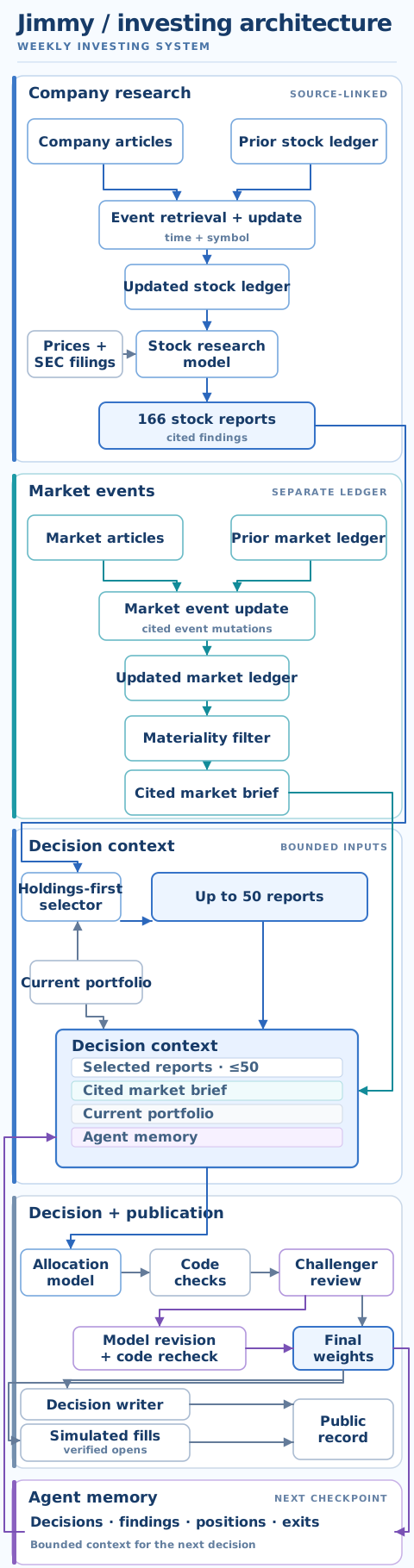
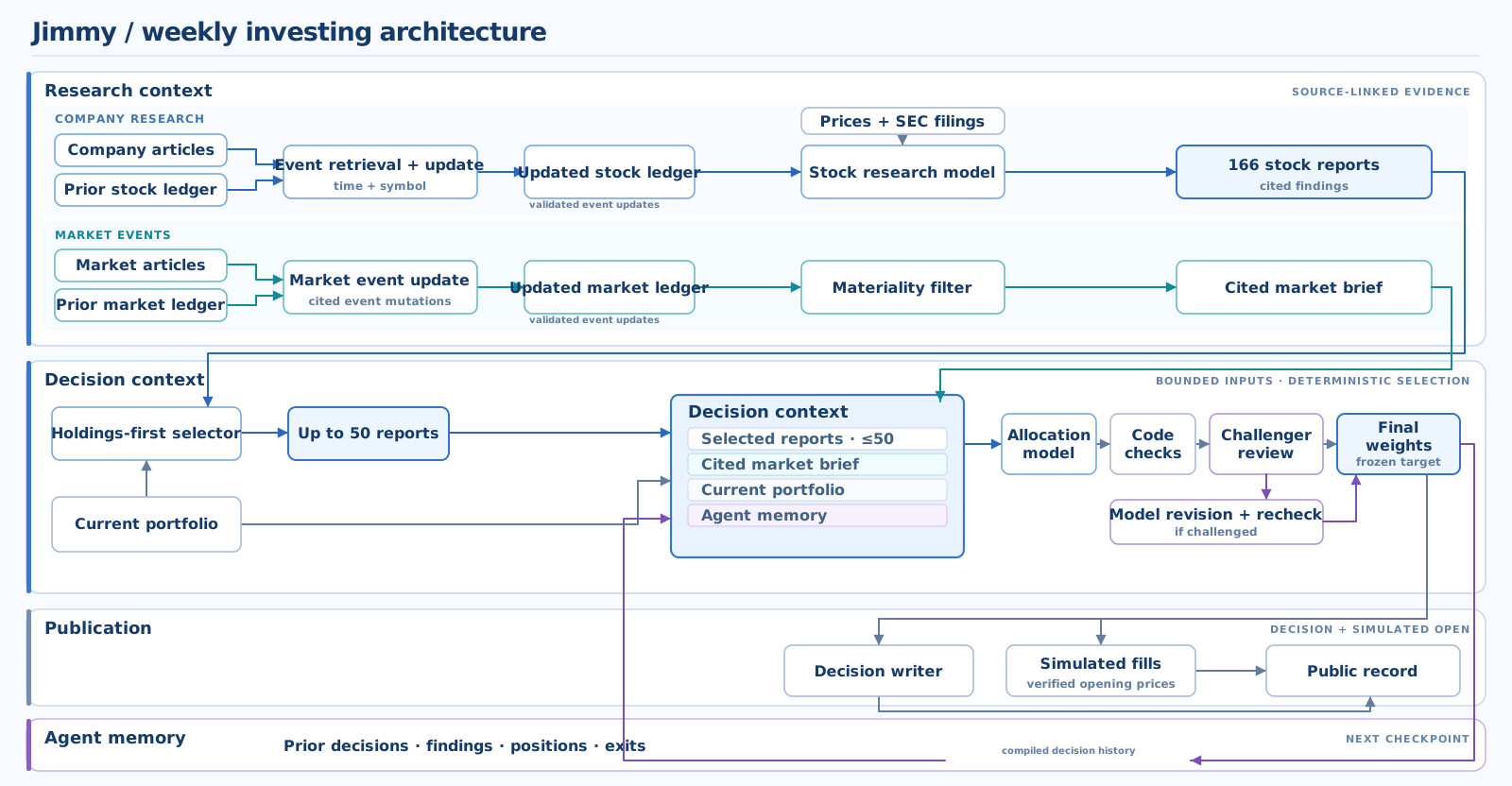
A fixed 166-security research universe becomes up to 50 selected reports. Jimmy combines them with a cited market brief, current holdings, and prior-decision memory, then checks and challenges the proposed allocation.
From decision to public record
Each published checkpoint links the decision to simulated trades, holdings, and portfolio values after source and model checks pass.
How to read the results
The simulated portfolio begins at an illustrative $100,000. Its published values describe the period shown, not a forecast.
Research lineage
Research, put to work weekly
Jimmy is informed by these studies. Its implementation uses decision-time evidence, task-specific frontier models, a fixed universe, and an ongoing public record.